

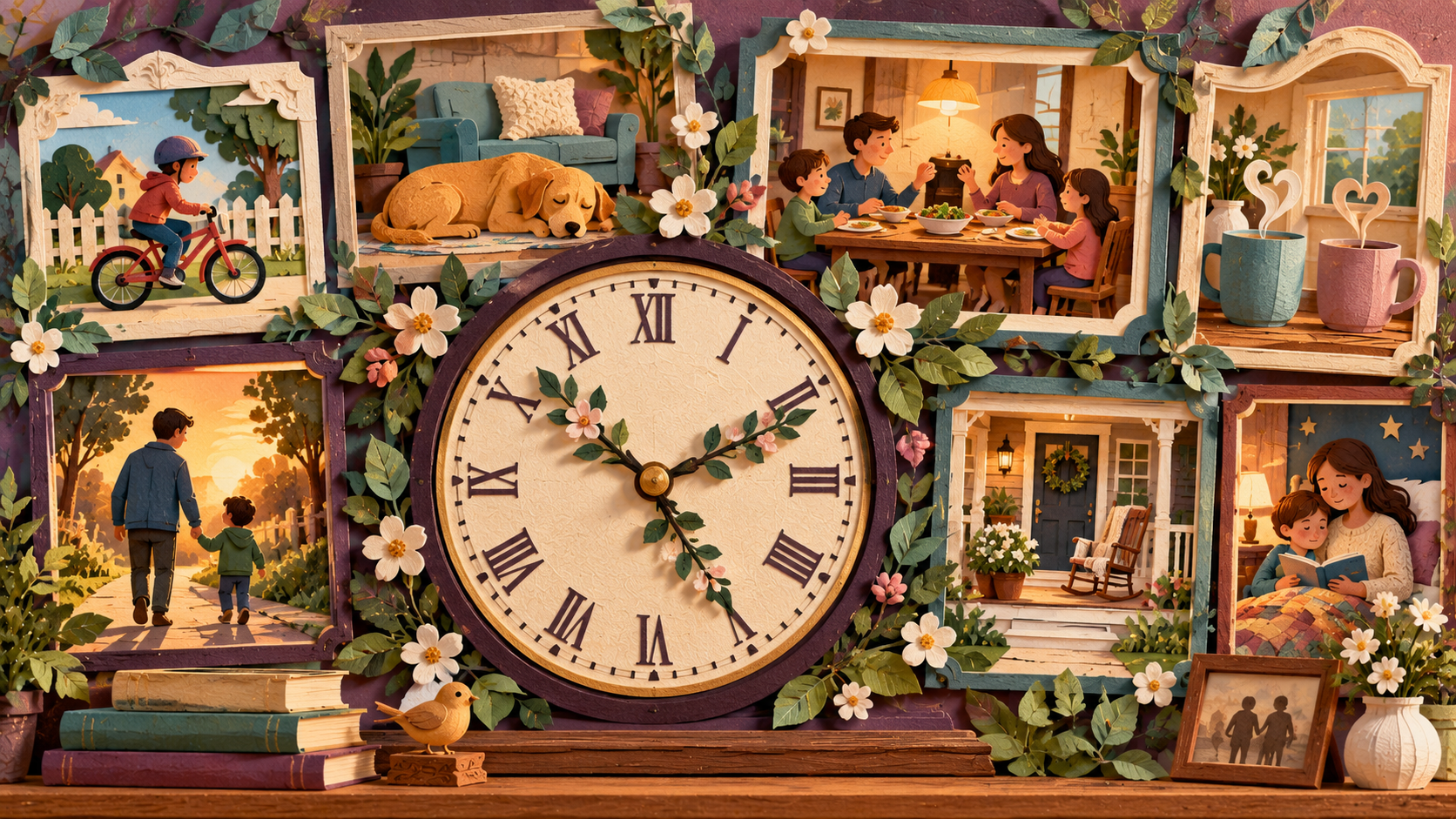
There will come a day when you look back at this season of your life and wish you could experience just one ordinary afternoon from it again.
Not necessarily a vacation.
Not a birthday.
Not a holiday.
Just a regular day.
The sound of your children laughing in another room.
The familiar chaos of everyone trying to get ready in the morning.
A conversation with your spouse while making dinner.
The dog following you around the house.
A Saturday afternoon when nobody had anywhere particularly important to be.
A Sunday morning with coffee, a quiet house, and absolutely nothing remarkable happening.
Today, those moments might feel ordinary.
Someday, they may feel priceless.
And that’s one of life’s strangest realities.
We often don’t recognize the best parts of our lives until they’ve become memories.
The Days We Can’t Wait to Get Through
Think about how often we find ourselves looking forward to something.
Friday.
The weekend.
Summer vacation.
The next holiday.
The next promotion.
The day the kids become more independent.
The day the business runs smoothly.
The day the mortgage is paid off.
The day we finally have enough money to relax.
There’s nothing wrong with having goals.
Anticipation is part of what makes life exciting.
But sometimes we become so focused on the next milestone that we start treating the present as something we simply need to get through.
Monday becomes a day to survive.
Tuesday becomes another step toward Friday.
Wednesday is the middle of the week.
Thursday means we’re almost there.
And Friday is finally the day we’ve been waiting for.
Then the weekend disappears.
And the cycle begins again.
Before we know it, months have passed.
Then years.
And we realize we’ve spent an extraordinary amount of time waiting for life to become something other than what it already is.
The Ordinary Moments Are the Ones That Disappear
When we think about the happiest memories of our lives, we often imagine big events.
Weddings.
Graduations.
Family vacations.
Birthdays.
Major accomplishments.
Those moments matter.
But some of our most meaningful memories are surprisingly ordinary.
Maybe you remember sitting at your grandparents’ kitchen table.
The smell of breakfast.
The sound of someone washing dishes.
The way the sunlight came through the window.
Nothing particularly exciting happened.
Nobody took a photograph.
Nobody knew it was a moment worth remembering.
Yet decades later, you would give almost anything to sit at that table again.
That’s what makes ordinary moments so extraordinary.
We don’t always recognize their value while we’re living them.
One Day, Your House Will Be Quieter
If you’re raising children, you probably know what a busy household feels like.
Shoes everywhere.
Laundry that never seems to end.
Someone asking what’s for dinner.
Someone needing a ride.
A forgotten school assignment.
Another practice.
Another appointment.
Another request for money.
Another argument about something that seems completely insignificant.
Some days, it’s exhausting.
You might find yourself wishing for a little more peace.
A little more quiet.
A little more time to yourself.
And that’s completely understandable.
But imagine your house fifteen years from now.
The bedrooms may be empty.
The schedules may be less complicated.
The laundry may be manageable.
The refrigerator might stay full longer.
You may finally have all the quiet you once wished for.
And there may be evenings when you miss the noise.
The interruptions.
The constant activity.
The sound of everyone being home.
Not because those years were perfect.
But because they were yours.
The things that make life feel overwhelming today may become the very things you miss tomorrow.
Your Children Are Growing Even When You Don’t Notice
There’s something fascinating about watching children grow.
When they’re little, every change seems enormous.
Their first steps.
Their first words.
Their first day of school.
Learning to ride a bicycle.
Losing a tooth.
But as they get older, the changes become less obvious.
One day, they stop asking you to read them a bedtime story.
You don’t necessarily realize it was the last time.
One day, they no longer need help tying their shoes.
One day, they stop reaching for your hand when crossing the street.
One day, they drive themselves to practice.
One day, they start making plans that don’t include you.
And eventually, they begin building lives of their own.
That’s what we want for them.
We want them to grow.
Become independent.
Find happiness.
Build meaningful lives.
But knowing that doesn’t make every transition easy.
Parenthood involves a strange combination of pride and nostalgia.
You’re excited about who they’re becoming.
While occasionally missing who they used to be.
The challenge is remembering to appreciate who they are right now.
Your Spouse Is Living This Chapter With You
It’s easy to become so focused on responsibilities that we forget to appreciate the person sharing them.
You discuss schedules.
Bills.
Work.
Children.
Appointments.
Household projects.
What needs to happen tomorrow.
Who’s picking someone up.
What needs to be purchased.
What needs to be fixed.
And suddenly, your conversations revolve almost entirely around managing life.
But somewhere underneath all those responsibilities is the relationship that brought you together.
The person you once stayed up late talking to.
The person you laughed with over absolutely nothing.
The person you imagined building a future alongside.
And now you’re living that future.
It may not look exactly like you pictured.
There may be more responsibilities.
More stress.
More complicated decisions.
But there is also a shared history.
Inside jokes.
Memories.
Challenges you’ve overcome together.
And countless ordinary moments that have quietly become the foundation of your relationship.
Don’t wait for an anniversary or vacation to appreciate that.
Sometimes the most meaningful thing you can do is sit beside your spouse and recognize how much life you’ve already experienced together.
The Trap of Thinking Happiness Is Somewhere Else
We live in a world that constantly encourages us to want more.
A bigger house.
A better car.
A more impressive career.
A larger investment account.
A more exciting lifestyle.
Another vacation.
Another achievement.
Another improvement.
And pursuing those things isn’t inherently wrong.
Ambition can create opportunity.
Financial success can provide security.
Personal growth can make life richer.
But there’s a difference between wanting to improve your life and believing your life cannot be enjoyed until it’s improved.
Consider someone who spends years working toward financial independence.
They tell themselves they’ll relax once they reach a certain number.
But when they reach it, the number changes.
They want a little more.
Then a little more.
And the finish line keeps moving.
Meanwhile, the years continue passing.
Their children grow.
Their parents age.
Their relationships change.
Their health may change.
And the time they thought they’d eventually enjoy keeps slipping away.
Building a better future should never require ignoring the present entirely.
You Don’t Need a Perfect Life to Appreciate It
It’s important to recognize something.
Not every season of life is wonderful.
Some seasons are genuinely difficult.
Financial stress.
Health concerns.
Family conflict.
Grief.
Exhaustion.
Uncertainty.
You may be facing challenges that make it difficult to feel grateful.
And you shouldn’t have to pretend everything is beautiful when it isn’t.
Appreciating life doesn’t mean denying its difficulties.
It means allowing yourself to recognize moments of goodness even when other things remain unresolved.
A difficult week can still contain a meaningful conversation.
A stressful month can still include laughter.
A challenging year can still hold memories worth keeping.
Gratitude doesn’t erase hardship.
But it can help prevent hardship from becoming the only thing we notice.
The Last Time You Did Something Without Knowing It
Think about the house you grew up in.
At some point, you walked out of it for the last time as a child.
You probably didn’t know it was the last time.
You were simply going somewhere.
Maybe to school.
Maybe to a friend’s house.
Maybe you were moving away.
But that particular version of your life was ending.
The same thing happens throughout adulthood.
The last time your child asks you to carry them.
The last family vacation before everyone begins making their own plans.
The last dinner with everyone living under the same roof.
The last ordinary conversation with someone who won’t always be here.
We rarely receive an announcement that a moment is about to become a memory.
That’s why presence matters.
Not because we should live in fear of losing things.
But because awareness can help us appreciate them while they’re still happening.
Take More Ordinary Pictures
Most people take photographs when something special happens.
A vacation.
A celebration.
A graduation.
A holiday.
But consider taking more photographs of ordinary life.
Your kitchen on a Sunday morning.
Your children sitting on the couch.
The family dog sleeping in its favorite spot.
Your spouse cooking dinner.
The backyard.
The house before another renovation.
The car filled with backpacks on the way to school.
Not every photograph needs to be beautiful.
Not every moment needs to be shared online.
Some photographs can simply exist for your family.
Years from now, you may discover that the most meaningful images aren’t the carefully posed ones.
They’re the pictures that remind you what everyday life actually felt like.
Make Time for the People Who Won’t Always Be Available
As life becomes busier, it’s easy to postpone relationships.
You mean to call your parents.
You plan to visit a relative.
You keep saying you’ll have lunch with an old friend.
You promise to get together when things slow down.
But life doesn’t always slow down on its own.
And people don’t remain available forever.
Schedules change.
Families move.
Health changes.
Circumstances shift.
Sometimes opportunities disappear before we realize how much they mattered.
You don’t need to maintain every relationship perfectly.
But it’s worth asking whether the people who matter most are receiving enough of your time.
A short phone call.
A Sunday lunch.
A spontaneous visit.
A simple message.
These things may seem small.
But relationships are often built through repeated moments of connection.
The Good Old Days Weren’t Always That Good
Here’s something worth remembering.
When we look back at earlier seasons of life, our memories often soften the difficult parts.
We remember the laughter.
The excitement.
The people.
The places.
We don’t always remember the same level of detail about the stress.
The bills.
The arguments.
The sleepless nights.
The uncertainty.
That’s part of why nostalgia can be so powerful.
We compare a complicated present with a selectively remembered past.
And sometimes the present loses that comparison unfairly.
The truth is that the good old days probably included plenty of ordinary frustrations.
Just like today.
And that’s encouraging.
Because it means your current life doesn’t have to be perfect to become something you’ll someday remember fondly.
Stop Waiting for the Big Moments
What if you approached this weekend differently?
Instead of asking what exciting thing you could do, ask what ordinary moment you could enjoy more fully.
Maybe it’s breakfast with your family.
Watching a movie together.
Walking the dog.
Cooking dinner.
Sitting outside.
Talking with your children.
Having coffee with your spouse.
Calling someone you haven’t spoken to recently.
None of these things requires an elaborate plan.
And that’s the point.
You don’t need to create a remarkable event to experience a meaningful day.
Sometimes you simply need to notice the day you’re already having.
Don’t Turn Presence Into Another Assignment
There’s an irony in conversations about living intentionally.
We can become so focused on appreciating every moment that we turn it into another responsibility.
We feel guilty when we’re distracted.
Guilty when we’re tired.
Guilty when we need time alone.
Guilty when we don’t make every weekend memorable.
But life isn’t supposed to be a constant exercise in maximizing happiness.
Some days are boring.
Some evenings are frustrating.
Sometimes you need to rest.
Sometimes you need to be alone.
Sometimes you simply need to get through a difficult day.
That’s okay.
Being present doesn’t mean enjoying every second.
It means making room to experience your life rather than constantly wishing it were somewhere else.
Imagine Looking Back Ten Years From Now
Here’s a simple exercise.
Close your eyes for a moment.
Imagine it’s October 2036.
Ten years have passed.
Your children are older.
Your family looks different.
Your career or business may have changed.
Your home may be different.
Some people who are part of your daily life today may no longer be nearby.
Now imagine being given the opportunity to return to one completely ordinary day in October 2026.
Not to change anything.
Not to make a different decision.
Just to experience it again.
What would you want to do?
Who would you want to see?
What sounds would you want to hear?
What conversations would you want to have?
What familiar routines would you want to experience?
Would you spend that day worrying about a minor inconvenience?
Would you spend hours scrolling through your phone?
Would you rush through dinner?
Or would you slow down and appreciate the people around you?
Now open your eyes.
You’re here.
It’s still October 2026.
And some of those moments are still available.
A Different Kind of Sunday
Today, try something simple.
Choose one ordinary part of your day and pay attention to it.
Maybe it’s the sound of your family waking up.
The smell of breakfast.
A conversation at the kitchen table.
The afternoon sunlight coming through the window.
A familiar voice.
A quiet moment with someone you love.
You don’t need to document it.
You don’t need to make it special.
You don’t need to turn it into a social media post.
Just notice it.
Recognize that this exact version of your life will never exist again.
Not because something terrible is about to happen.
But because life keeps moving.
People grow.
Circumstances change.
And every season eventually becomes part of our story.
The Real Meaning of a Rich Life
We often measure a rich life through accomplishments.
The things we’ve built.
The money we’ve earned.
The places we’ve traveled.
The goals we’ve achieved.
Those things can certainly contribute to a meaningful life.
But richness also exists in experiences that don’t appear on a financial statement.
The sound of your children laughing.
A conversation with your spouse.
A Sunday dinner.
A friendship that has lasted decades.
The comfort of a familiar home.
The feeling of being surrounded by people who know you.
These moments may not increase your net worth.
But they can make your life feel extraordinarily valuable.
And perhaps that’s something we should remember more often.
Today’s Reflection
One day, you may look back at this exact season of your life and call it the good old days.
Not because everything was perfect.
Not because every problem had been solved.
Not because you had achieved every goal.
But because of the people who were there.
The routines you shared.
The memories you were making without realizing it.
The ordinary experiences that quietly became extraordinary.
So don’t spend your entire life waiting for the next chapter.
Enjoy the one you’re living.
Keep building.
Keep growing.
Keep dreaming.
But remember to look around occasionally.
Because the life you’re living right now is already becoming a memory.
And someday, you may wish you could come back to it for just one more ordinary Sunday.
Don’t become so focused on creating a better tomorrow that you overlook the life happening right in front of you.
🌱 The Daily Vine
💭 Today’s Thought
“The life you’re living right now will one day be the good old days.”
📚 Book Recommendation
The Power of Moments — Chip Heath and Dan Heath
An insightful exploration of why certain experiences become meaningful memories and how we can become more intentional about the moments that shape our lives.
🎯 Today’s Challenge
Take one photograph of something completely ordinary in your life today.
Not a posed picture. Not something you plan to post.
Just a small moment you might enjoy remembering ten years from now.
💰 Money Minute
Money can create opportunities, but it cannot guarantee unlimited time.
As you plan for the future, consider setting aside resources for meaningful experiences with the people you love—not just long-term financial goals.
❤️ Relationship Reminder
The people closest to you don’t always need another gift or elaborate experience.
Sometimes they simply need your attention during an ordinary moment.
🙏 Gratitude Prompt
What is something about your everyday life that you might deeply miss ten years from now?
🌿 Grow Today
Spend ten minutes today doing something familiar without checking your phone, rushing, or thinking about what comes next.
Simply enjoy being where you are.
Reflection Question
If you could return to one ordinary day from your past, which day would you choose—and what does that tell you about the moments you should appreciate more today?
Recommended Resources
The Power of Moments — Chip Heath and Dan Heath https://link.amazon/B01ajPSE0
Four Thousand Weeks — Oliver Burkeman https://link.amazon/B0fsZ8bBU
The Art of Noticing — Rob Walker https://link.amazon/B0c9wYgN2
The Book of Delights — Ross Gay https://link.amazon/B07VLpchJ
The Happiness Project — Gretchen Rubin https://link.amazon/B075MWEEu
Affiliate disclosure: Some recommended resources may contain affiliate links when published. SproutVine may earn a commission from qualifying purchases at no additional cost to readers.
🌱 Frequently Asked Questions (FAQ)
1. Why is it important to appreciate the little things in life?
Appreciating the little things helps us recognize happiness and meaning in everyday experiences rather than constantly waiting for major milestones. Simple moments like family dinners, conversations with loved ones, and quiet mornings can become some of our most treasured memories. Practicing gratitude can also support emotional well-being and greater life satisfaction.
2. How can I learn to live in the present instead of always thinking about the future?
Start by intentionally slowing down during ordinary activities. Put your phone away during family meals, pay attention to conversations, and spend a few minutes each day noticing your surroundings. You can still plan for the future while making a conscious effort to enjoy the life you’re living today.
3. Why do we often appreciate moments more after they’re gone?
Our memories tend to emphasize meaningful emotions, relationships, and experiences. As life changes, ordinary routines can take on greater significance because they remind us of people, places, and seasons we can no longer experience in exactly the same way. Nostalgia can make those moments feel especially valuable.
4. How can parents make more meaningful memories with their children?
Meaningful family memories don’t always require expensive vacations or elaborate activities. Cooking together, having family game nights, taking walks, reading bedtime stories, and spending uninterrupted time together can create lasting connections. The most important factor is often the quality of attention parents give their children.
5. Can practicing gratitude really make you happier?
Research suggests that regularly practicing gratitude can improve positive emotions, life satisfaction, and overall psychological well-being, although results vary from person to person. Simple habits like writing down three things you’re thankful for or reflecting on a meaningful moment can help shift your attention toward the positive aspects of everyday life.
6. How do I stop feeling like life is passing by too quickly?
While you cannot slow down time, you can become more intentional about how you experience it. Create meaningful routines, reduce unnecessary distractions, spend quality time with loved ones, and make space for new experiences. Taking photographs, journaling, and reflecting on your day can also help you preserve memories and become more aware of the present.
7. How can I balance working toward future goals with enjoying my life today?
The key is recognizing that ambition and contentment can coexist. Continue working toward financial security, career success, and personal growth, but establish boundaries that protect time for family, relationships, hobbies, and rest. A successful future should enhance your life—not require you to sacrifice every opportunity to enjoy the present.