

“Mom, I’m bored.”
For many parents, those three words can trigger an immediate response. We start searching for activities, turning on a screen, planning an outing, or finding something—anything—to keep our children entertained.
But what if boredom isn’t actually a problem?
What if boredom is one of the greatest opportunities for growth that children experience?
In today’s world, children have access to more entertainment than any generation in history. Television, streaming services, tablets, smartphones, video games, and social media provide constant stimulation at the touch of a button.
Yet despite all of these options, children often struggle with creativity, patience, and independent thinking.
The reason may be surprisingly simple: they rarely have the chance to be bored.
Boredom Creates Creativity
When children are bored, their brains begin searching for ways to stay engaged.
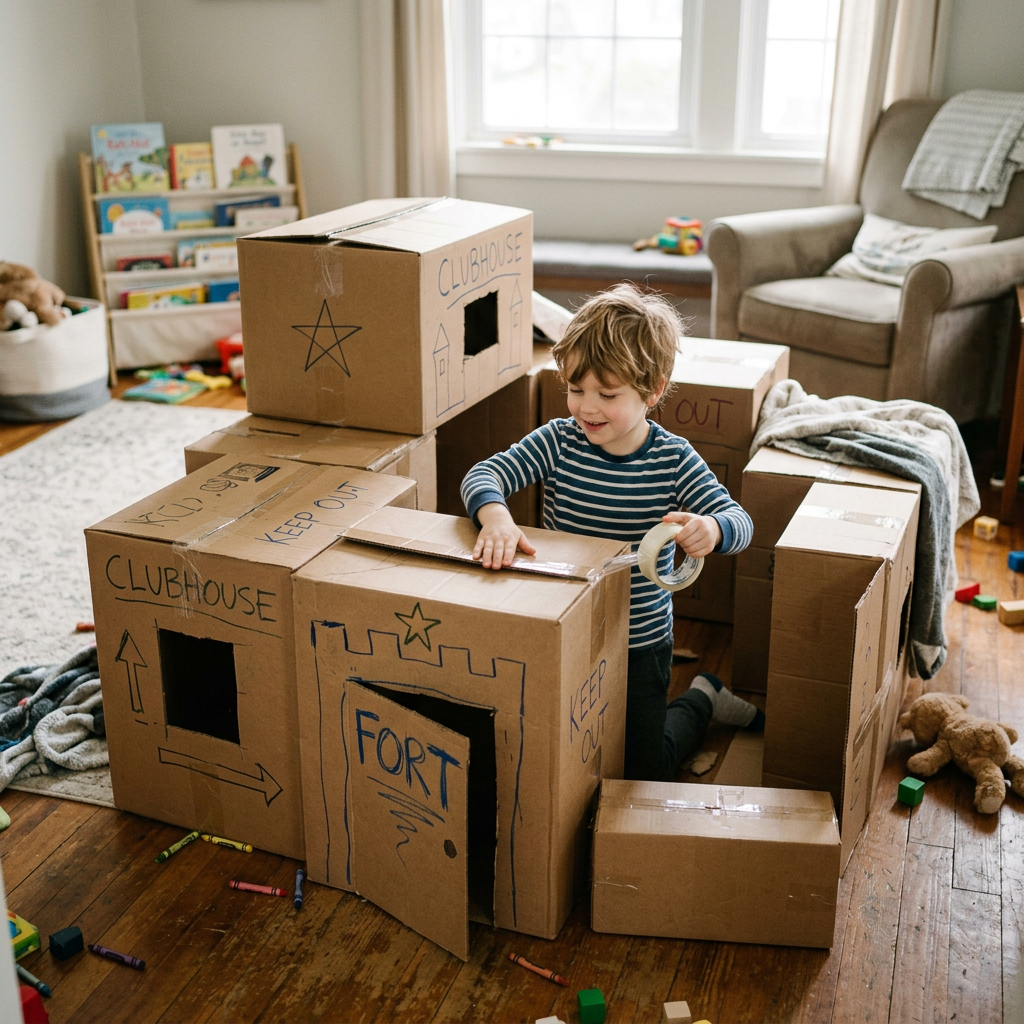
A cardboard box becomes a spaceship.
A blanket becomes a fort.
A stick becomes a magic wand.
Without constant entertainment being provided, children begin creating their own.
Many of the world’s greatest inventions, ideas, and works of art started during moments of boredom when someone’s imagination was forced to fill the gap.
Boredom Teaches Problem-Solving
When a child says they’re bored, they’re actually facing a small problem.
The challenge becomes: “What should I do now?”
When parents immediately solve that problem, children miss an opportunity to think for themselves.
When given the space to figure it out, children learn how to:
- Make decisions
- Explore interests
- Create activities
- Entertain themselves
- Develop independence
These skills serve them far beyond childhood.
Constant Entertainment Has a Cost
Modern technology is amazing and can absolutely have a place in a healthy family life.
However, when every quiet moment is filled with stimulation, children may begin to expect constant entertainment.
This can make ordinary activities feel less enjoyable and reduce their ability to focus, wait patiently, or engage in imaginative play.
Learning how to sit with boredom helps children build attention spans and emotional regulation.
Independent Play Builds Confidence
One of the biggest benefits of boredom is that it often leads to independent play.
Independent play teaches children:
- Self-confidence
- Creativity
- Persistence
- Resourcefulness
- Emotional resilience
When children create their own fun, they begin to trust their own abilities rather than relying on someone else to direct every moment.
What Parents Should Do Instead
The next time your child says, “I’m bored,” resist the urge to immediately fix it.
Instead, try responding with:
- “What ideas do you have?”
- “I wonder what you could create.”
- “Let’s see what your imagination comes up with.”
You don’t need to ignore them. You simply need to give them the opportunity to think.
You might be amazed at what follows.
The Hidden Gift
Boredom isn’t a sign that something is wrong.
It’s often the beginning of something wonderful.
It’s the space where imagination grows.
It’s the pause before creativity begins.
It’s the moment when children learn they are capable of creating their own adventures.
As parents, we often feel pressure to keep our children busy every minute of the day. But some of childhood’s greatest lessons happen during the unscheduled moments.
So the next time you hear, “I’m bored,” take a deep breath and smile.
You may be witnessing the start of your child’s next great idea.