

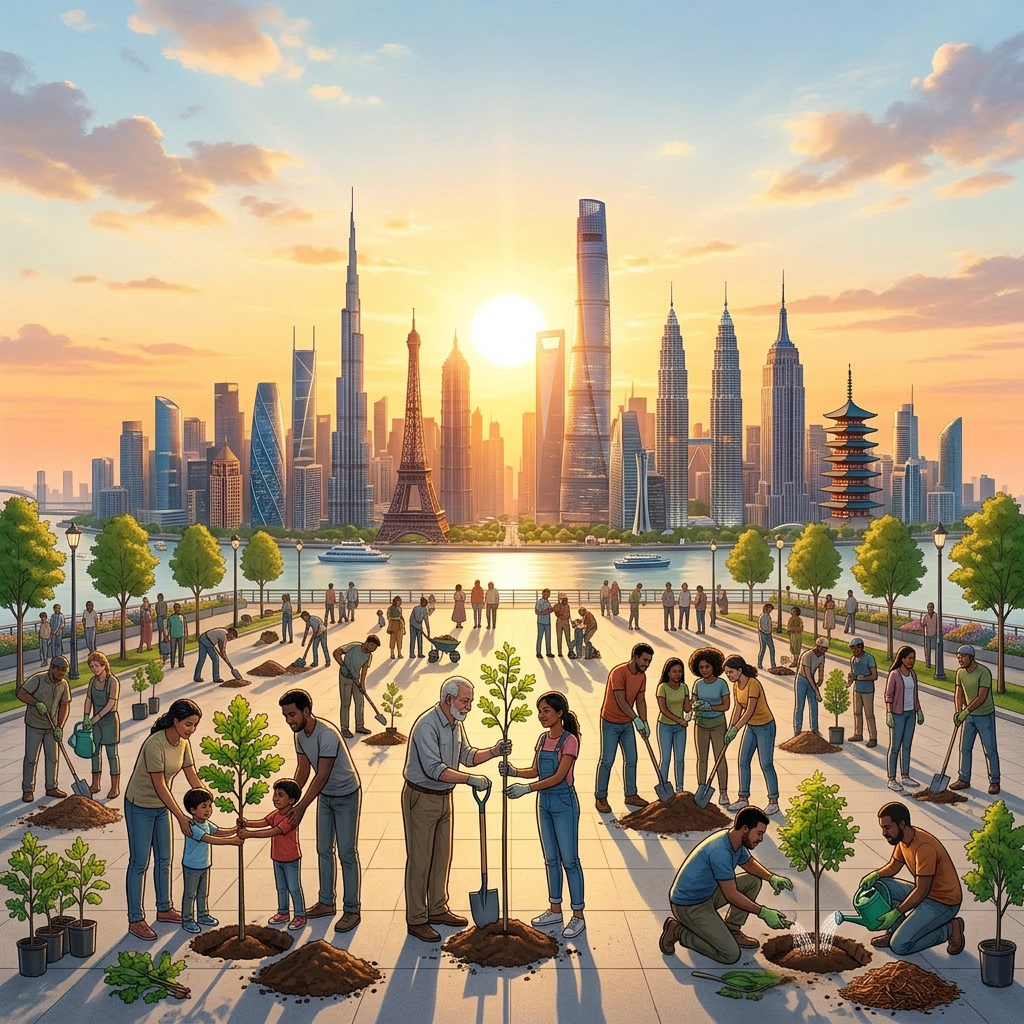
Every generation believes it is living through unprecedented times. In many ways, 2026 certainly feels that way. Between economic uncertainty, political division, rapid technological advancement, international conflicts, and the constant stream of breaking news, it’s easy to feel overwhelmed.
Yet despite the challenges facing our world today, there are also reasons for optimism. The state of the world is not defined solely by its problems but also by humanity’s ability to adapt, innovate, and persevere.
A World Connected Like Never Before
Technology has fundamentally changed how we live. Information travels across the globe in seconds. Families can communicate instantly regardless of distance. Businesses can operate internationally from a laptop. Medical breakthroughs are happening faster than ever before.
Artificial intelligence is perhaps the biggest technological story of our time. While some fear its impact on jobs and society, others see opportunities to improve healthcare, education, scientific research, and productivity. Like every major innovation before it, AI presents both challenges and opportunities that society will need to navigate carefully.
Economic Challenges Continue
Many families continue to feel pressure from rising costs. Housing, insurance, healthcare, and everyday expenses have increased significantly over the past several years. While unemployment remains relatively low in many areas, affordability remains a major concern for households trying to build financial security.
For business owners, the environment remains competitive. Labor shortages, regulatory changes, and economic uncertainty require companies to be more adaptable than ever before. However, entrepreneurship continues to thrive, proving that innovation often emerges during difficult times.
Political Division and Public Trust
Political disagreements have become increasingly visible across many countries. Social media has amplified differing viewpoints and, at times, deepened divisions between people who may otherwise have more in common than they realize.
Despite these challenges, most people still share similar goals: safe communities, strong families, economic opportunity, quality education, and a better future for their children. Remembering these shared values can help bridge divides and encourage productive conversations.
The Importance of Family and Community
While global events dominate headlines, most people’s lives are shaped by something much closer to home: family, friends, neighbors, and local communities.
The truth is that we have far more influence over our immediate surroundings than we do over world events. We can support local businesses, volunteer in our communities, mentor young people, strengthen our families, and treat others with kindness and respect.
These actions may seem small, but they create meaningful change.
Reasons for Hope
It’s easy to focus on what is wrong with the world. The news often highlights conflict, tragedy, and controversy because those stories attract attention. Yet every day, countless positive things happen that rarely make headlines.
Doctors save lives. Teachers inspire students. Parents sacrifice for their children. Volunteers serve their communities. Entrepreneurs create jobs. Scientists develop new treatments. Neighbors help neighbors.
Progress is often quiet.
Throughout history, humanity has overcome wars, economic crises, natural disasters, and countless other challenges. While today’s problems are real, history reminds us that people are remarkably resilient.
Looking Forward
The state of the world in 2026 is complex. There are challenges that deserve attention and solutions. There are also incredible opportunities that could improve lives for generations to come.
Perhaps the most important thing we can do is focus on what we can control: our character, our families, our communities, and our actions. When enough people do that, positive change follows.
The future is not something that simply happens to us. It is something we create together.
And that should give us all reason to hope.