
Parents often put enormous pressure on themselves to be perfect.
Perfect schedules.
Perfect meals.
Perfect discipline.
Perfect routines.
Perfect reactions.
But the truth is, children do not need perfect adults nearly as much as they need emotionally calm and emotionally safe ones.
In a world filled with stress, noise, distractions, and uncertainty, one of the greatest gifts an adult can give a child is emotional stability.
Children absorb more than most adults realize.
They notice tension in voices.
They notice anxiety in the room.
They notice how adults respond to pressure, frustration, fear, and conflict.
Long before children fully understand words, they understand emotional environments.
That is why emotionally calm adults have such a powerful impact on childhood development.
A calm adult teaches a child that problems can be handled without panic.
A calm adult teaches emotional regulation by example.
A calm adult creates a sense of safety that allows children to grow with confidence rather than fear.
This does not mean adults should never feel stressed or emotional. Children benefit from seeing healthy human emotions. They learn resilience when adults model how to navigate challenges appropriately.
The problem is not emotion. The problem is emotional chaos without stability.
Modern parenting can feel overwhelming. Parents today are balancing work, finances, school schedules, technology, social media pressures, extracurricular activities, and nonstop information overload. Many adults are mentally exhausted before the day even begins.
Because of this, many parents feel guilty when they lose patience or struggle emotionally.
But children do not need robotic perfection.
They need consistency, love, reassurance, and adults who are willing to repair moments when mistakes happen.
In fact, one of the healthiest things a parent can do is apologize when they handle something poorly. That teaches children accountability, humility, and emotional maturity.
Children learn emotional regulation from repetition and environment.
When adults consistently respond with calm guidance rather than explosive reactions, children slowly begin developing those same emotional habits themselves.
Research in child development continues to show that emotionally secure children tend to perform better socially, academically, and behaviorally over time. Emotional safety affects confidence, communication skills, stress management, and even long-term mental health.
This is especially important during early childhood years.
Young children are still learning how to process frustration, disappointment, excitement, fear, and conflict. Their brains are developing rapidly, and they rely heavily on adults to help them understand and regulate those feelings.
Sometimes the most important parenting moments are not the big milestones.
They are the quiet moments.
The calm conversation after a meltdown.
The reassurance after a scary day.
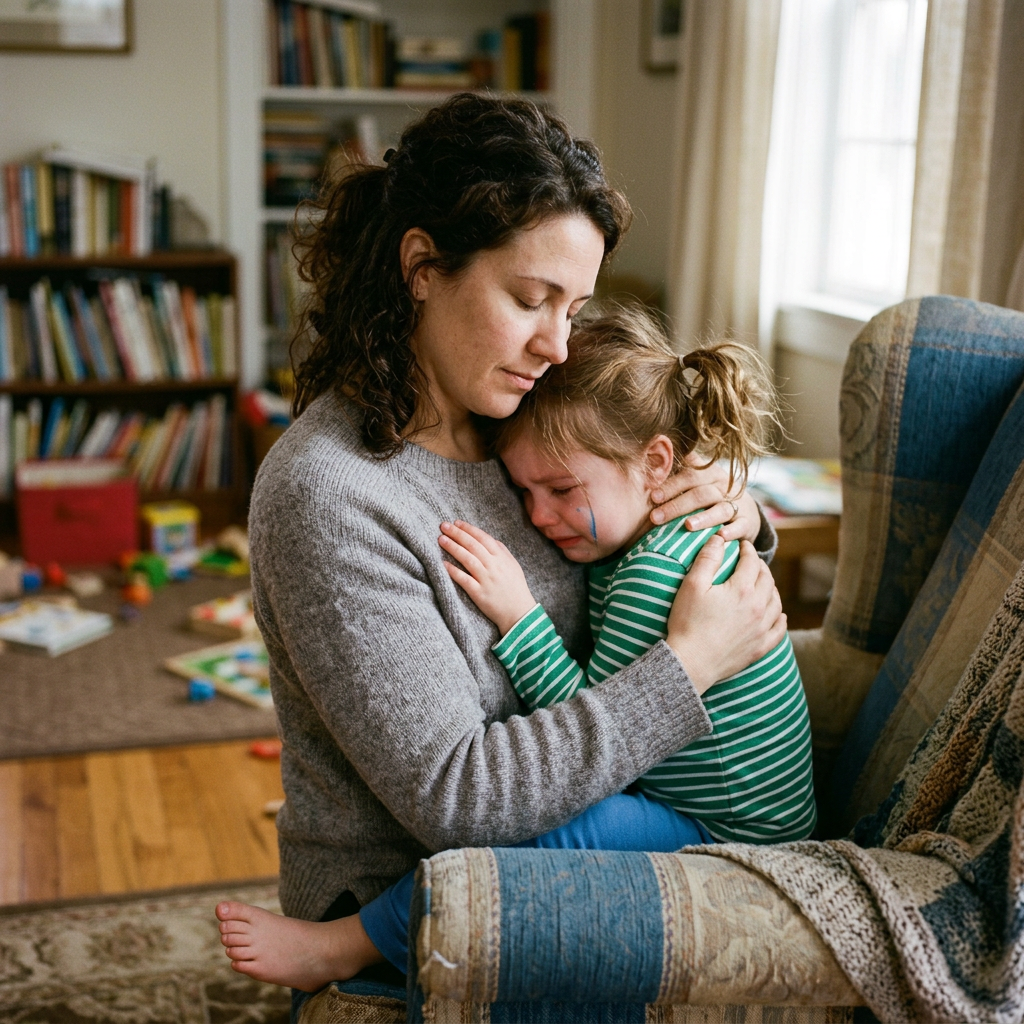
The hug after disappointment.
The patient explanation instead of yelling.
Those moments shape children deeply.
Children may not remember every toy they received or every activity they attended, but they will remember how adults made them feel during difficult moments.
Did they feel safe?
Did they feel heard?
Did they feel supported?
Emotionally calm adults create emotionally resilient children.
And perhaps that is one of the most important forms of parenting there is.